
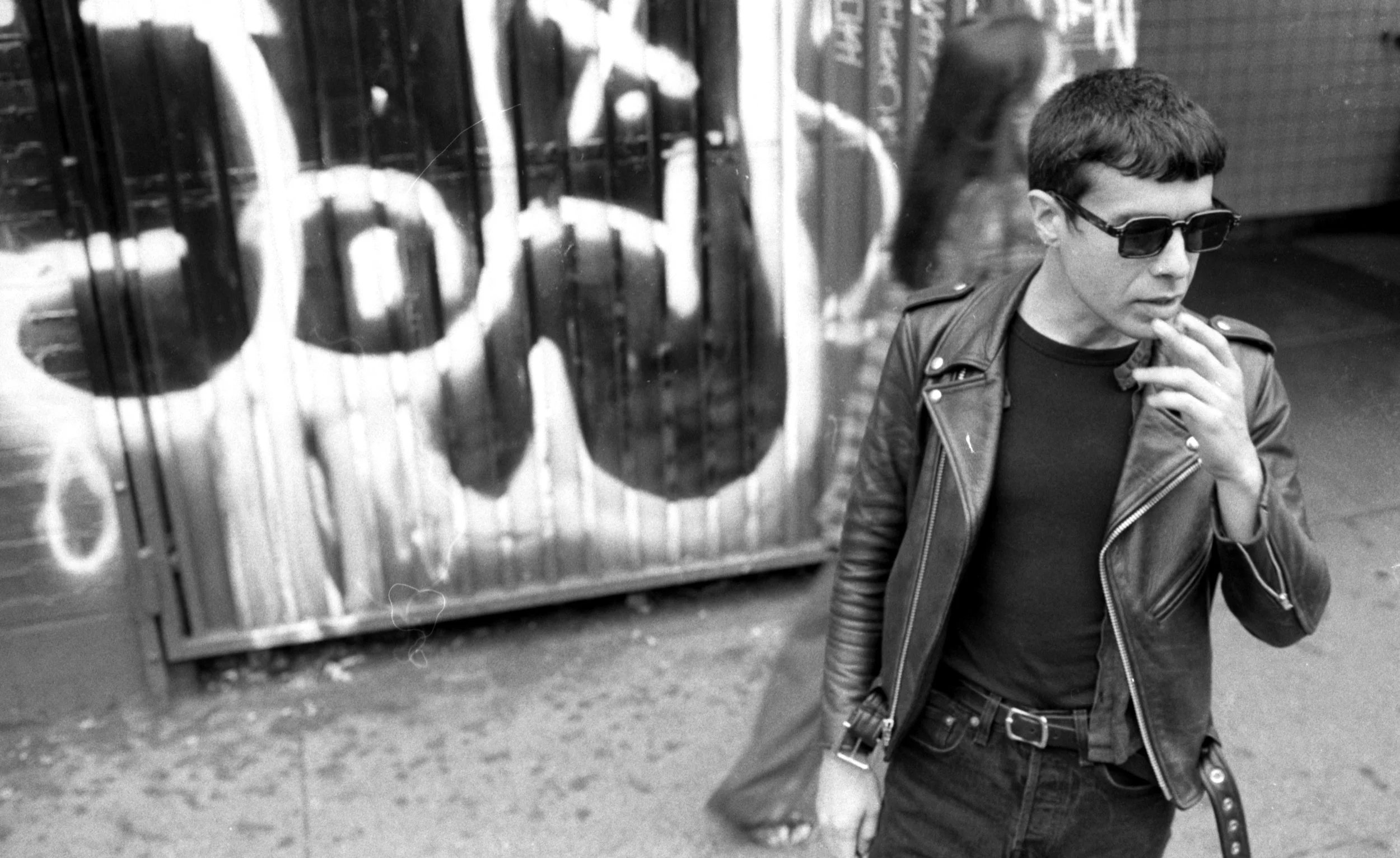
Felix Walworth was born on Broome Street. Before they were a fixture of New York City’s 2010s DIY circuit, before they adopted their signature standing bass-drum on a keyboard stand, before they wrote piercing reflections on identity that earned cult followings from kids on Tumblr, they were a kid, too, growing up across the boroughs, growing to love a city that eventually became unrecognizable.
What’s Up is Walworth’s fourth album as Told Slant, the moniker under which, since 2012, they’ve released aching albums of spacious, raw-nerves indie rock. This one is their New York record, a collection of songs about watching your hometown change and feeling the ways it has in turn changed you. It’s a record about commitment to a precarious music life, and all the beauty and indignities that come with it. If the first three Told Slant albums were about self-interrogation and trying to survive as an artist, What’s Up is about what happens once you’ve committed “somewhat maniacally to the project of self expression and subculture in one of the most hostile environments on earth,” as Walworth puts it—and now must contend with all of the people and places and dreams that have died along the way.
The record’s title—an inquiry without a question mark—holds a sort of hard-earned wisdom. Perhaps it's asking a question with no expectation of an answer. Or maybe it suggests knowing the answers but not liking them. “What’s up here is kind of just one inflection of many what’s up’s on the record,” Walworth says. “There’s also what happened to my home, where is god, and why am I suffering.” It comes with a heaviness, but also with a wink.
“Manhattan” is the record’s most fitting entry point, a discography highlight for Walworth, who looks for the inspired scene of their youth and sees chain stores instead. “What happened, how did we lose Manhattan?” they deadpan. “What have they done to this place that I love, is what everyone’s asking.” It’s a dose of townie realism at a time when romanticization of the place has been on high; a concerned love song, one of their most driving to date, anthemic but somehow also extremely dejected, with just a riff for a chorus.
The simmering rage bubbles again on “Draw Blood,” a poetic rendering of the hopelessness one can’t help but feel here sometimes. It opens with little blue deli coffee cups, fueling up for work just to get by and wake up and do it again. “This city’s a casino,” they proclaim. “This city’s a mass grave.” The tenor is generalized anger. “I think there is a frustration on this record, a set of grievances that feels so overwhelming to me, that the only way I felt I could express it was in religious appeals,” Walworth says. “When you are defeated entirely, what do you have other than prayer?”
Other moments are more tender, like a glimpse of domestic bliss in a tiny apartment on a loud street (“Three Anchovies”) or a song dedicated to their late cat Marcie. The title track is the album’s most dark and delicate, a hushed vignette of the moments after getting the news that a close friend had passed away, huddled with friends trying to make sense of it all. “I texted her just this morning,” Walworth sings in a crackling whisper. “I texted her just to say what’s up.
Told Slant’s latest also includes some of their hardest and most leftfield composition and production choices to date, like “Rain of God,” a trance meditation that follows the title track and runs for eight minutes, with all the tension of a devastated narrator who seems on the brink of shouting why or how or god help us. Then there’s “I am a Singer,” which they alternately describe as “atonal dance music about the horrors of being an artist,” and an excavation of the “megalomaniacal” tendencies that can haunt those who dedicate their lives to music-making.
What’s Up is the most collaborative record they’ve ever made, with drums, bass and guitar tracked by Walworth with Hannah Pruzinsky and Jonnie Baker, and everything arranged by the three of them as well. The record came together in a makeshift studio they built upstate for a month, recording everything to an eight-track reel-to-reel, making it the first mostly-analog Told Slant record. Ceci Sturman, Hellen Ballentine, Emily Sprague, Mari Rubio, and Elijah Wolf also contributed performances.
This is Walworth’s first record since 2020, and as they explained it, some of the early writing for these songs was inspired by their own work as a portrait and street photographer. On long, pandemic-era photo walks, they would traverse Washington Square Park and Tompkins and St. Mark’s documenting characters and travelers, putting them in a new type of relationship to local geography. “I took this one photo walk where I tried to go to all of the places I used to go before and after high school, when I would take the train to Delancey and walk to avenue D,” they recalled. “And every single place was gone. The diner where I would get a two dollar bagel on a plate or a 75 cent buttered roll. Even the park that I would go to and drink in was under construction. It was unrecognizable. I was thinking about the Jonathan Richman song ‘Corner Store.’ It’s just this beautiful song about losing your corner store, having this intimate connection to this place and mourning this loss. I was feeling angry at everyone around, at the businesses, at the culture.”
And that’s not to mention the disappearance of the DIY music infrastructure that defined New York for generations, that the pandemic era seemed to wash away more meaningfully. A supercut of Walworth’s coming-of-age in New York music would include teenaged shows at Cake Shop and the old Knitting factory, on empty subway cars and in Bushwick parking lots, and an antifolk era playing solo sets at the old Shea and Silent Barn.
Told Slant—the band name references Emily Dickinson once writing to tell all the truth but tell it slant—began to take shape when they were a college student in the early 2010s, taking a deeper interest in more wistful, slower, emptier sounds than the boisterous punk of their youth; taking inspiration from early Modest Mouse b-sides as well as peers like Vermont’s Hello Shark. “I wanted to be able to say a lot without saying much,” Walworth says. “That became the goal. To paint a scene and create room for the listener.” After graduating, another education came through living in various Brooklyn community art spaces, and grinding at seemingly never-ending tours, making full loops around the country with their own music and in bands like Florist, Bellows, and Gabby’s World.
The first Told Slant record, Still Water, came in 2012, followed by Going By (2016) and Point the Flashlight and Walk (2020) . The songs they’ve released across the years have been imbued with a potent sense of catharsis. Theirs are painfully honest gut-punches of songs about self-discovery and self-interrogation, life and death and mystery and swimming spots, subway cars and public parks and waking up at 2 o’clock, about friendship and romance and the “slow loss of connectedness with your community or loved ones,” as they put it. At shows, Walworth sings while standing over a stripped down drum kit. The heft of their songcraft is carried by their distinctive drumming—a style that feels almost like they are falling over the kit, grabbing and playing off melodies, a bit behind the beat—and their distinct voice, which often sounds like they are singing for their life. “I can shriek at a pitch more dissonant,” they sang in 2016. “Sometimes I have to.”
Reflecting on “Manhattan,” from What’s Up, Walworth spoke of the DIY scenes that raised them, but of the decades before them too. To date, Walworth still plays the same drum set that their father gifted them as a pre-teen—and one he once played as a member of Thurston Moore’s late 70s band the Coachmen. The song brings to mind not just all of the years they’ve spent playing shows in New York—not just “New York becoming a shrine to capitalism and the underground being unable to mount any effective resistance”—but also “this whole other set of knowledge of what living in the city as an artist could be, both from living it, and from my parents... The defeat of the song is all of those people’s dreams being crushed.”
The relationship is complicated. “I do kind of love the twisted game of it,” they admit, thinking more on “Draw Blood.” “There is this sick part of me that is playing the game and wants to win, and wants the glory … And there is definitely an indignation because of being from here where I am like, you cannot make me leave. But I’m also cataloguing the costs of that on one’s soul.”